
Diamond Education

DIAMOND EDUCATION

Understanding Your Diamond

Every diamond tells its story through light, proportion and detail. Understanding the essential characteristics of a diamond can help you select a piece that feels right for your style, occasion and budget.

This guide explains lab-grown diamonds, the 4Cs, diamond shapes, settings and certification.

What Is a Lab-Grown Diamond?

A lab-grown diamond is created in a controlled laboratory environment using advanced technology that recreates the conditions under which diamonds form.

Lab-grown diamonds have essentially the same chemical composition, crystal structure and optical properties as mined diamonds. They display the brilliance, sparkle and durability expected from a diamond.

They are not the same as diamond simulants such as cubic zirconia or moissanite.

How Are Lab-Grown Diamonds Created?

Two principal methods are used:

Chemical Vapour Deposition — CVD

A small diamond seed is placed inside a controlled chamber. Carbon-rich gases gradually form layers of diamond crystal around the seed.

High Pressure High Temperature — HPHT

This method recreates the intense pressure and temperature conditions associated with natural diamond formation.

Both methods can produce gem-quality diamonds. A grading laboratory can identify whether a diamond is lab-grown and may also identify its growth method.

Understanding the 4Cs

The quality and appearance of a diamond are commonly assessed through four characteristics: cut, colour, clarity and carat weight.

Cut

Cut describes how effectively a diamond’s proportions, symmetry and polish interact with light.

A well-cut diamond can appear bright, lively and full of sparkle. Cut should not be confused with shape: shape refers to the diamond’s outline, while cut refers to the quality of its light performance.

Colour

Diamond colour is generally graded on a scale beginning with D, which represents colourless, and continuing through increasing levels of visible colour.

Near-colourless diamonds can offer an attractive balance between appearance and value. The colour of the surrounding gold can also affect how the diamond appears.

Clarity

Clarity considers the natural internal features and external characteristics of a diamond.

Internal features are called inclusions, while surface features are called blemishes. Many clarity characteristics are microscopic and cannot be seen without magnification.

Common clarity grades include:

  • FL — Flawless

  • IF — Internally Flawless

  • VVS1 and VVS2 — Very, Very Slightly Included

  • VS1 and VS2 — Very Slightly Included

  • SI1 and SI2 — Slightly Included

An eye-clean diamond has no inclusions easily visible to the unaided eye under normal viewing conditions, although its official clarity grade may vary.

Carat Weight

Carat measures a diamond’s weight, not its physical dimensions.

One carat equals 200 milligrams. Two diamonds with the same carat weight may appear different in size depending on their shape, cut proportions and setting.

For jewellery containing several diamonds, the product description may show the total diamond weight, meaning the combined weight of all diamonds in the piece.

Diamond Shape

Shape refers to the visible outline of a diamond.

Round

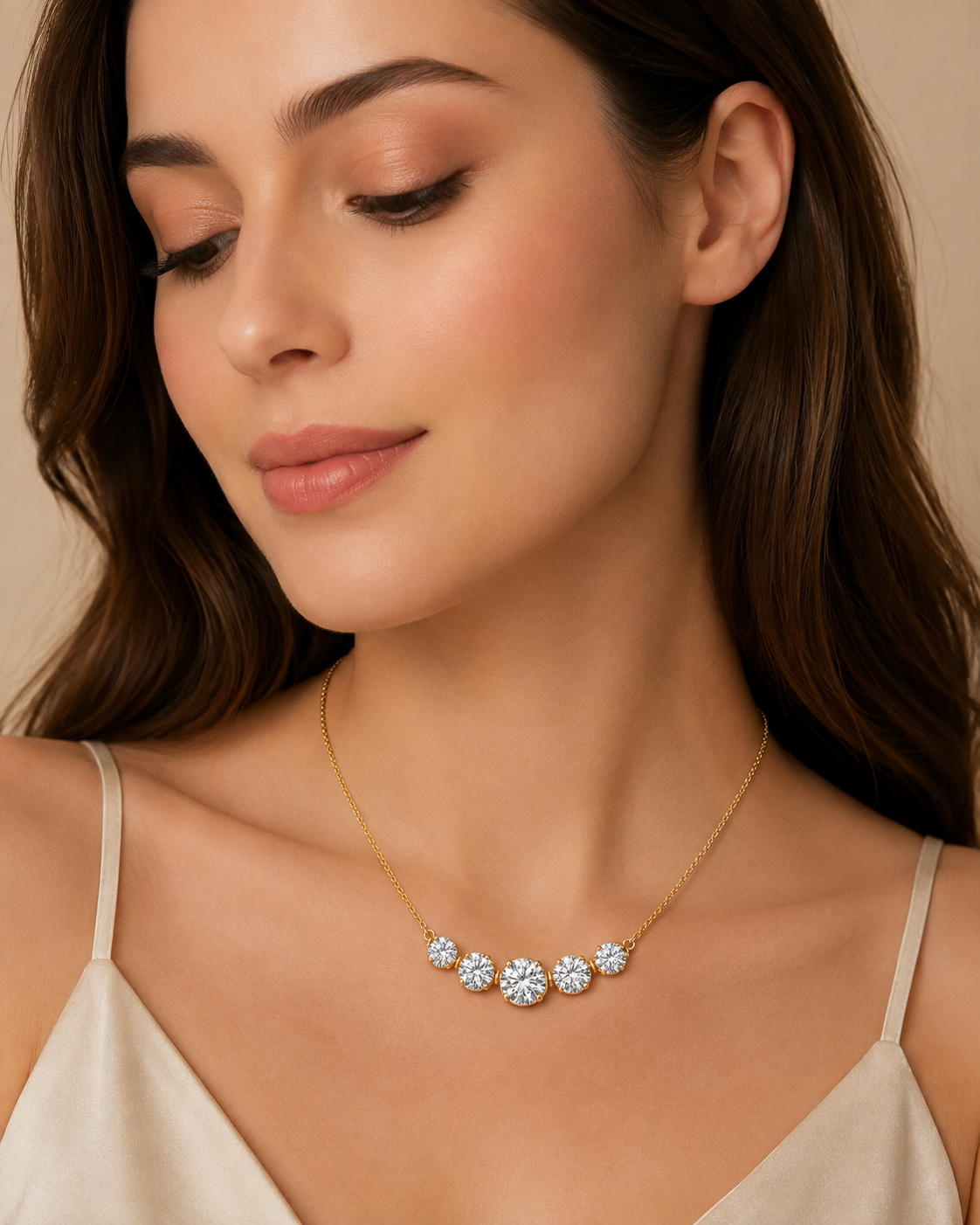
Known for its classic appearance and strong brilliance. Round diamonds complement almost every jewellery style.

Oval

An elongated shape with elegant sparkle. Its proportions can create the appearance of a larger surface area.

Emerald

A rectangular shape with stepped facets and a refined, hall-of-mirrors appearance. Emerald cuts tend to emphasise clarity.

Pear

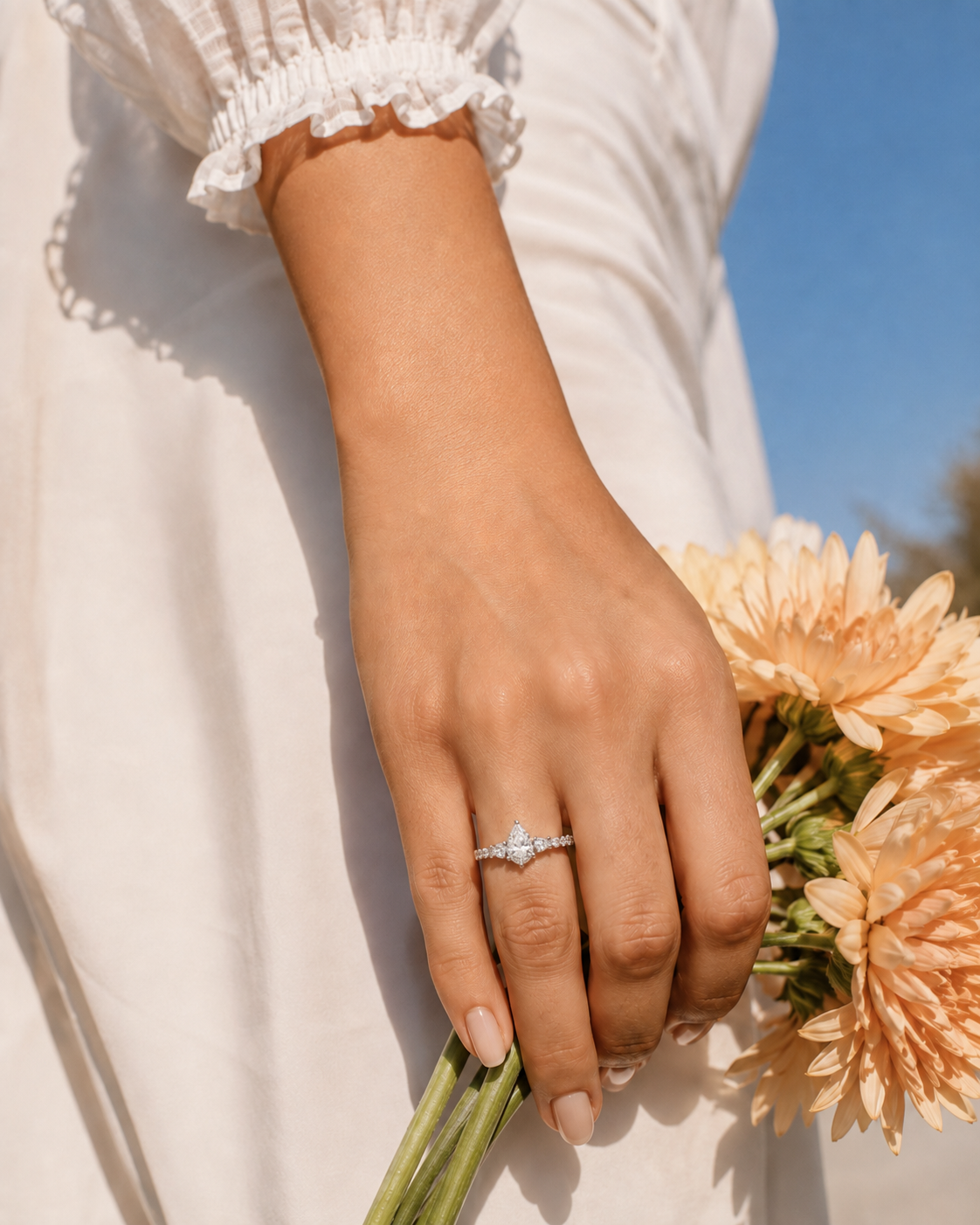
A combination of rounded and pointed forms. Pear-shaped diamonds have a graceful, distinctive silhouette.

Marquise

An elongated shape with pointed ends. It creates a dramatic appearance and can visually lengthen the finger.

Princess

A square or rectangular shape with sharp corners and modern brilliance.

Cushion

A square or rectangular shape with softly rounded corners, combining vintage character with contemporary sparkle.

Radiant

A square or rectangular shape featuring trimmed corners and brilliant-style faceting.

Heart

A romantic shape requiring careful symmetry and proportion to create a balanced outline.

Diamond Settings

The setting holds the diamond securely and influences the overall appearance of the jewellery.

Prong Setting

Small metal claws hold the diamond in place while allowing light to enter from multiple directions.

Bezel Setting

A rim of metal surrounds the diamond. This creates a smooth, modern appearance and offers additional edge protection.

Pavé Setting

Small diamonds are placed closely together to create a continuous surface of sparkle.

Channel Setting

Diamonds are secured between two parallel metal walls, producing a smooth and structured finish.

Halo Setting

A centre diamond is surrounded by smaller diamonds, increasing the visual impact and brilliance of the design.

Solitaire Setting

A single diamond forms the central focus of the piece, creating a timeless and elegant appearance.

Diamond Certification

An independent grading report records the assessed characteristics of a diamond, which may include:

  • Whether the diamond is lab-grown

  • Carat weight

  • Colour grade

  • Clarity grade

  • Cut information

  • Measurements and proportions

  • Polish and symmetry

  • A unique report number

Certification is provided only where specified for the individual product. Smaller diamonds used in multi-stone jewellery may be described through combined specifications instead of receiving individual reports.

Always check the product page or contact Oré Customer Care to confirm what documentation is included.

Choosing the Right Diamond

There is no single perfect diamond for everyone. Consider:

  • The style of jewellery

  • The diamond’s cut and visible brilliance

  • The preferred shape

  • The gold colour

  • The overall design and setting

  • Your personal priorities and budget

For many customers, a beautifully cut and visually clean diamond provides an excellent balance of brilliance and value.

Caring for Diamond Jewellery

Diamonds are highly durable, but they can still collect oils and residue. Their gold settings can also scratch, bend or loosen.

To care for your jewellery:

  • Remove it before exercising, swimming or performing manual work.

  • Keep it away from harsh chemicals.

  • Clean it gently with mild soap, lukewarm water and a soft brush.

  • Store each piece separately.

  • Have frequently worn jewellery inspected professionally.

  • Stop wearing the piece if a stone feels loose.

Do not use ultrasonic or steam cleaning unless a qualified jeweller confirms that it is safe for the specific design and setting.

Need Help Choosing?

Our Customer Care team can help you understand the specifications of a particular Oré design.

Email: support@orejewel.com
Phone/WhatsApp: +91 9677775661
Support hours: [Monday–Saturday, 10:00 AM–6:00 PM IST]

Oré — For every moment. Forever.